


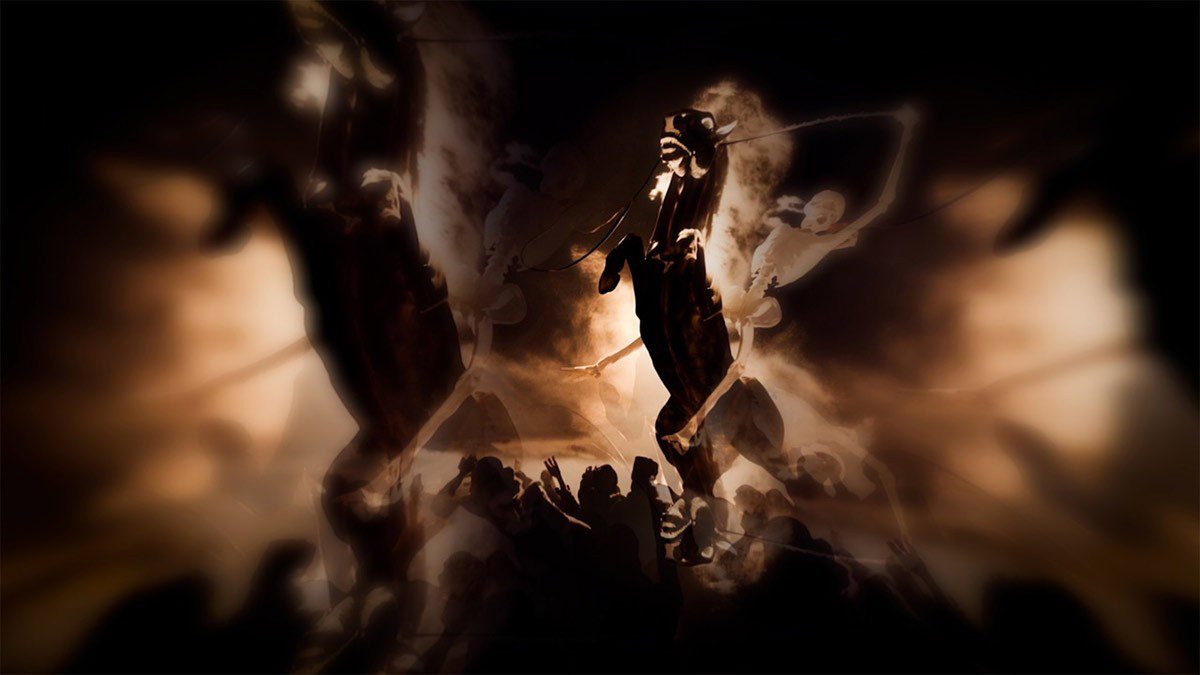
Brosch AI – Distorted Dreams
Juergen Hagler, Celine Pham, Jolanda Abasolo, Victoria Wolfersberger | 2025 | 6m 12s | AT
Radar Vienna AUSTRIAN Award
Brosch AI – Distorted Dreams is an experimental animated short film that explores the intersection of artificial intelligence, art, and archival material. It delves into the enigmatic world of the Upper Austrian artist Klemens Brosch (1894–1926), whose hauntingly melancholic and darkly romantic visual universe is now being reimagined through AI-driven animation.
Brosch, often described as a visionary talent plagued by inner demons, led a life marked by severe mental illness, morphine addiction, and ultimately suicide. His work, which oscillates between dreamlike beauty and eerie introspection, has been called a „psychogram of self-destruction“ (Nowak-Thaller, 2016). Brosch AI – Distorted Dreams seeks to expand on his artistic legacy by utilizing AI technologies to reconstruct, animate, and reinterpret his drawings.
By integrating images from Brosch’s archive and written sources about the artist into an AI workflow, this project experiments with the potential of AI-generated animation to deepen our understanding of his unique visual world. AI tools such as LumaLabs DreamMachine, Haiper, and Kling.ai are employed to transform Brosch’s original works into animated paintings while preserving his distinctive aesthetic.
The film unfolds as a balancing act between artistic fidelity and the unpredictable nature of AI-driven creativity. It highlights the tensions between human intention and algorithmic interpretation, revealing both the limitations and the unforeseen inspirations that arise from this collaboration. The AI’s output fluctuates between uncanny accuracy and unexpected distortions—an apt reflection of Brosch’s own tormented artistic vision.
Ultimately, Brosch AI – Distorted Dreams is more than just an animated film; it is an exploration of how artificial intelligence can be used as a tool to reinterpret and extend artistic heritage. By questioning the role of AI in art production and historical representation, the project opens up new perspectives on the ways we engage with the past through technology.